ACF (Advanced Custom Fields) lets you register custom post types and taxonomies from the WordPress admin without writing code. By default, they use standard slug-based URLs, with built-in settings for basic permalink changes.
If you need a more complex permalink structure, such as adding taxonomy terms or ACF field values to the URL, they are not enough. In these cases, you need custom code or an additional plugin that can implement more advanced URL formats.
This guide covers the available ACF settings for basic permalink changes and shows you how to create more advanced permalink structures with Permalink Manager.
How to Change ACF Permalinks From the ACF Settings
If you use Advanced Custom Fields (ACF) to register custom post types or taxonomies, you can configure their basic permalink structure directly in the ACF dashboard. You do not need an additional plugin or custom code.
ACF provides permalink settings when you register a custom post type or custom taxonomy. You can also access these settings later from:
- ACF → Post Types → Edit Post Type (for custom post types)
- ACF → Taxonomies → Edit Taxonomy (for taxonomies)
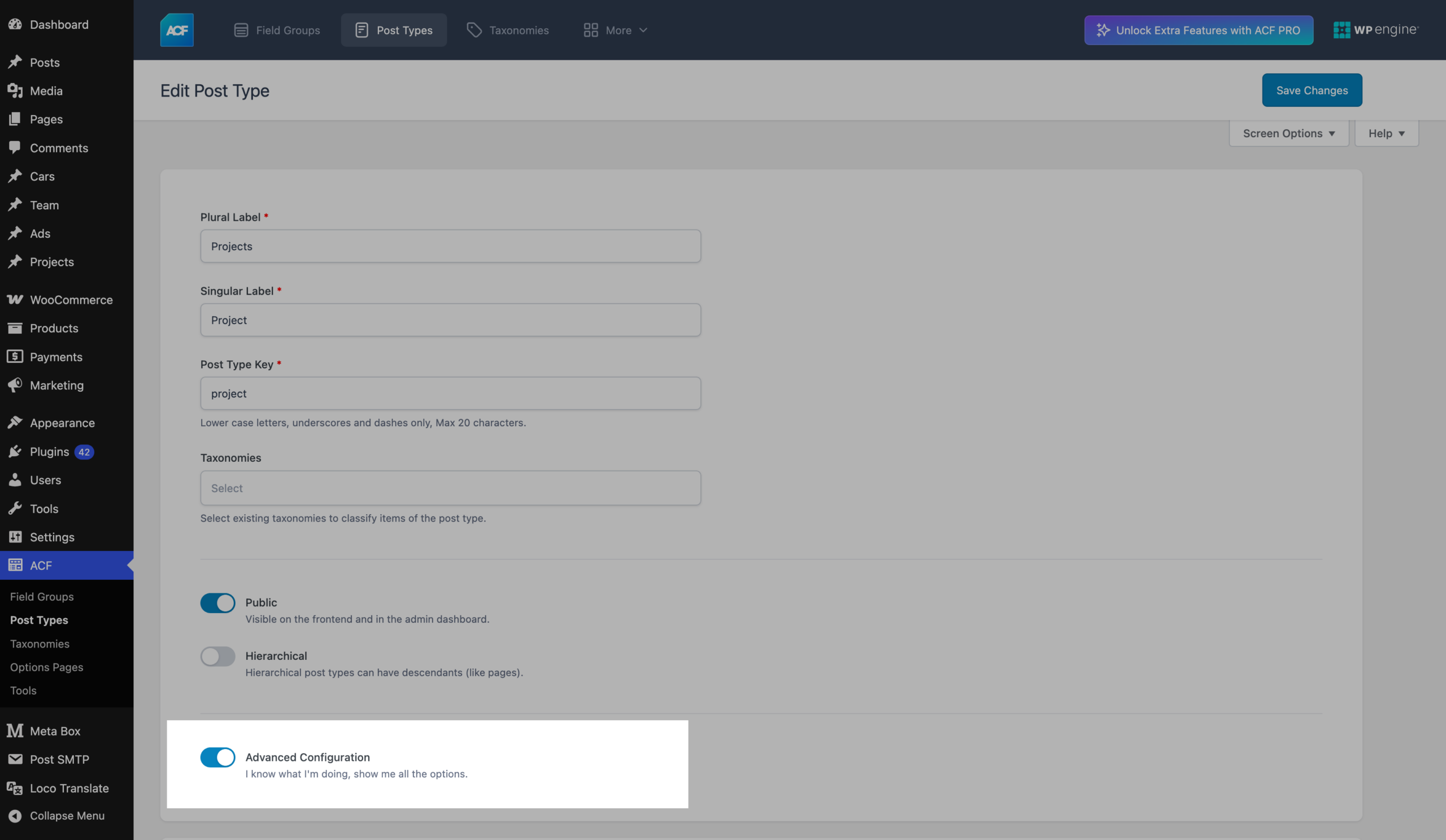
First, click Advanced Configuration to expand the additional settings. Then, open the URLs tab to display the permalink settings.
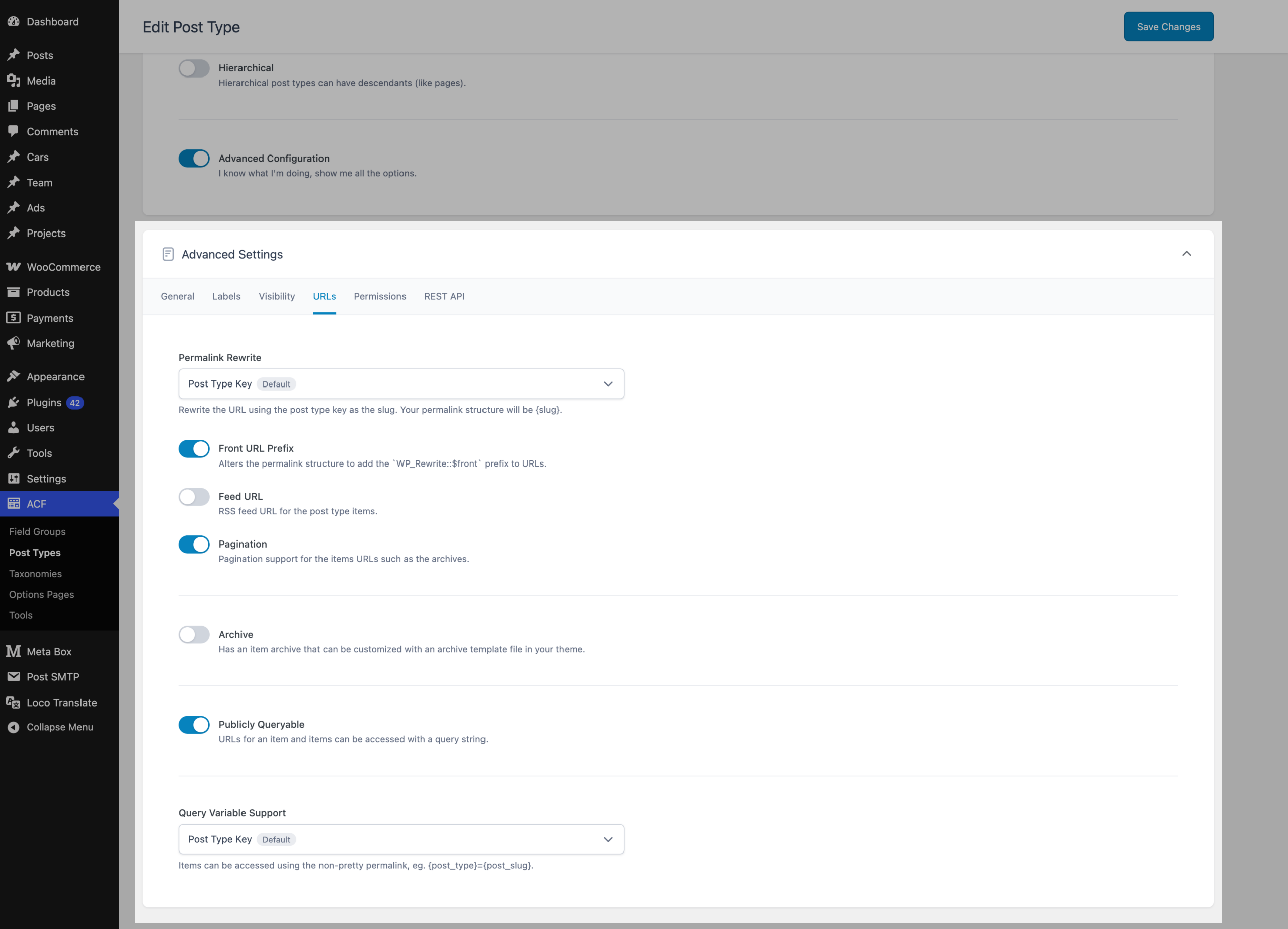
The URLs tab contains several permalink-related options for the custom post type or taxonomy you are editing.
Permalink Rewrite and URL Slug
The Permalink Rewrite setting controls how ACF/WordPress generates URLs for posts belonging to the custom post type. You can choose from the following options:
- Post Type Key (default): Uses the post type key as the URL slug.
- Custom Permalink: Lets you specify a different URL slug.
- No Permalink (prevent URL rewriting): Disables pretty permalink rewriting for the post type.
For example, if your post type key is project, select Post Type Key under Permalink Rewrite. You can then change the permalink base in the URL Slug field.
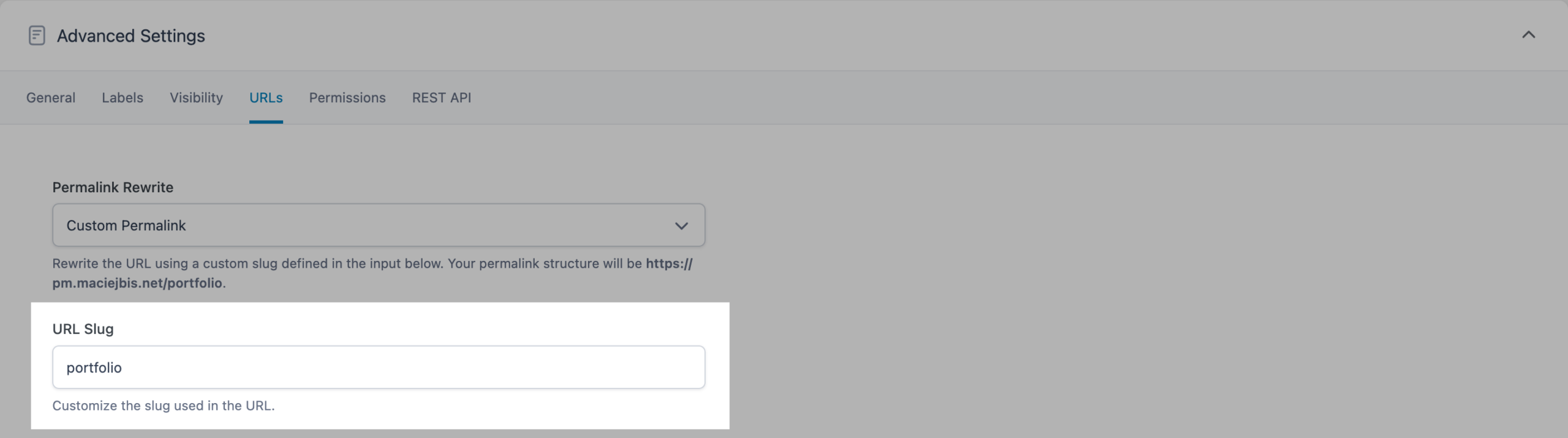
By default, the permalink uses the post type key:
https://example.com/project/product-name/If you set the rewrite slug to portfolio, WordPress will use:
https://example.com/portfolio/product-name/Archive Slug
If your custom post type has an archive, ACF lets you change its archive URL using the same URL settings.
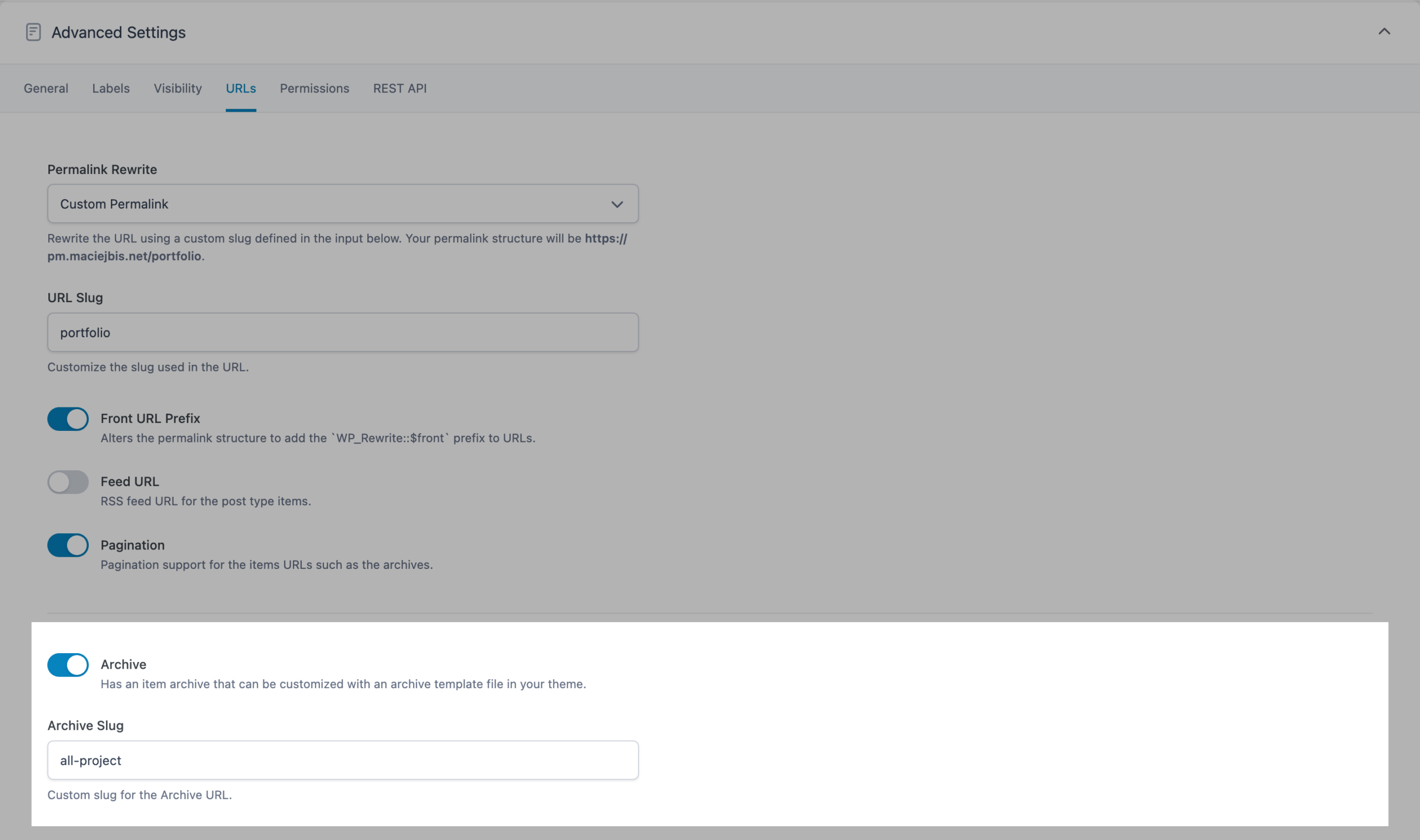
You can use this setting to replace the default archive URL. For example, a projects post type normally uses:
https://example.com/projects/you can change the archive slug to all-projects and use:
https://example.com/all-projects/Flush Rewrite Rules
WordPress stores the permalink structure in its cache, so the new URL settings may not take effect immediately.
Whether you change the rewrite base, the archive slug, or both, you need to flush the rewrite rules after updating the URL settings for an ACF post type or taxonomy.
Flushing the rewrite rules takes only a few clicks:
- Go to Settings → Permalinks in WordPress admin dashboard.
- Do not change any permalink settings on this screen.
- Click on "Save Changes" button.
Changing the permalink format can break existing URLs and cause them to return 404 errors. After changing it and flushing the rewrite rules, test the new URLs to confirm that they work correctly.
Search engines and other websites may still link to your old URLs. To prevent broken links, consider adding redirects from the old URLs to the new ones.
Changing the URL Structure Beyond the ACF Settings
If you need to customize the permalink structure of ACF-controlled post types or taxonomies, ACF does not provide a built-in setting for creating fully custom URL structures from the WordPress admin dashboard.
For example, if you register the post types job and event, and the taxonomy city, WordPress will generate URLs such as:
| Post type / taxonomy slug | Title | Default URL |
|---|---|---|
job |
Senior Barista | https://example.com/job/senior-barista/ |
event |
World of Coffee 2026 | https://example.com/event/world-of-coffee-2026/ |
city |
Brussels | https://example.com/city/europe/belgium/brussels/ |
You can change the base, such as /job/, /event/, or /city/, separately in the ACF permalink settings inside the "URL Slug" field. However, this changes only the base of the URL, not the rest of its structure.
ACF relies on WordPress's standard rewrite and permalink system, so it does not natively support more complex permalink structures such as /%city%/%job%/ (for example, /brussels/senior-barista/), where the URL reflects the content hierarchy or uses values stored in custom fields (ACF Support Forums, 2023).
To set-up more advanced permalink structures, you need either a custom code or install a dedicated permalink plugin.
A plugin is usually the more convenient option and can help prevent URL conflicts and related 404 errors, especially when the structure is ambiguous and WordPress may resolve a URL to the wrong content type.
How to Customize ACF Permalinks with Permalink Manager
How to Edit Individual Permalinks
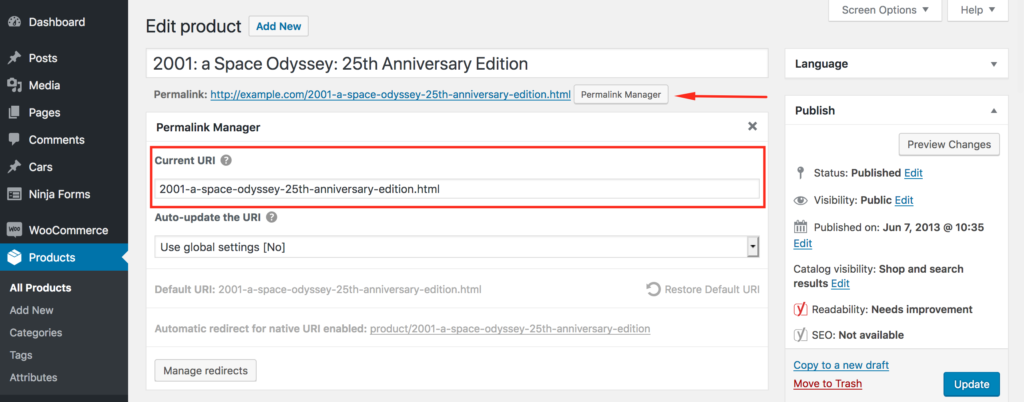
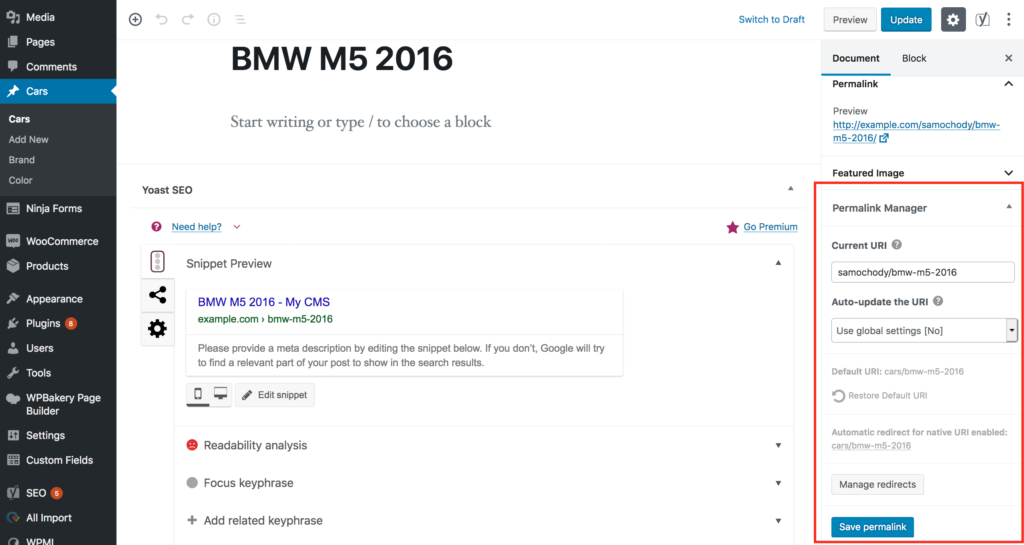
The custom permalink editor, added by Permalink Manager to every post edit screen, offers a straightforward way to change the permalink for any custom post type or custom taxonomy created with ACF.
It works much like the standard WordPress permalink editor. The difference is that you are not limited to the slug (last part of the URL) and you can adjust the entire permalink.
- Open the post in the WordPress editor.
- If you are using the Classic Editor, click the "Permalink Manager" button located just below the title field. For the Block Editor, you will find the editor already visible in the sidebar.
- Replace the existing permalink with the custom one, for example
/london/senior-barista/. - Save the post to apply the change.
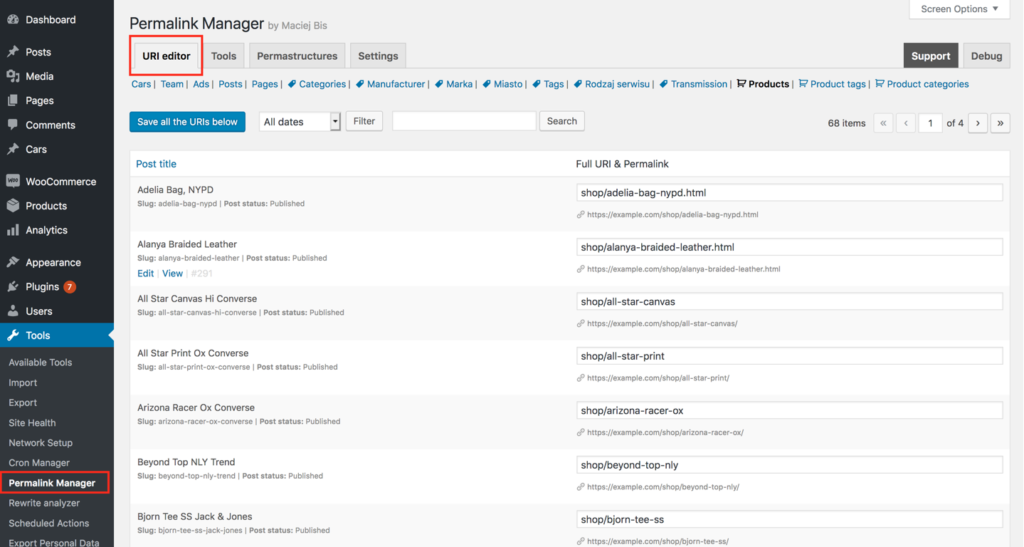
For larger websites, the Bulk URI Editor lets you edit multiple permalinks in one screen (grouped by post type and taxonomy). This makes it quicker than editing posts one by one when restructuring a group of URLs.
How to Change the Permalink Structure for an ACF Post Type
You can use the plugin to bulk change ACF permalink structures in several ways, such as:
- removing the post type slug,
- using the same URL base for mulitple ACF content types,
- or adding taxonomy terms to custom post type URLs.
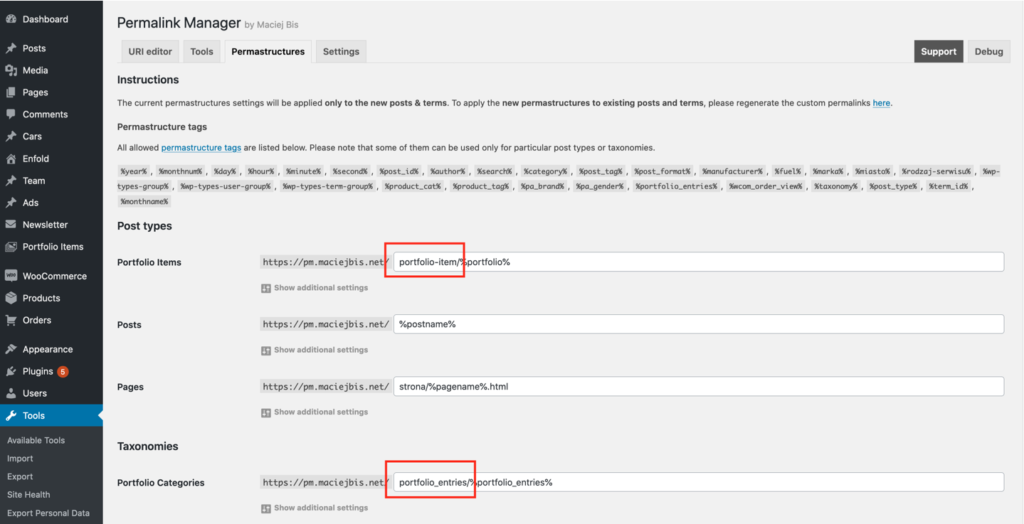
The Permastructures editor lets you make these changes in a few clicks, without writing and implementing code snippets. Follow the steps below to set up your permalink structure.
- Go to "Permalink Manager → Permastructures" in your WordPress admin.
- Find the ACF post type you want to modify.
- Replace the existing pattern with your new structure using the available tags.
- Click Save. The structure applies to new posts immediately.
- To update existing posts, open the "Regnerate/reset" tool and run it for the selected post type.
Using Custom Fields in Permalinks for ACF Post Types
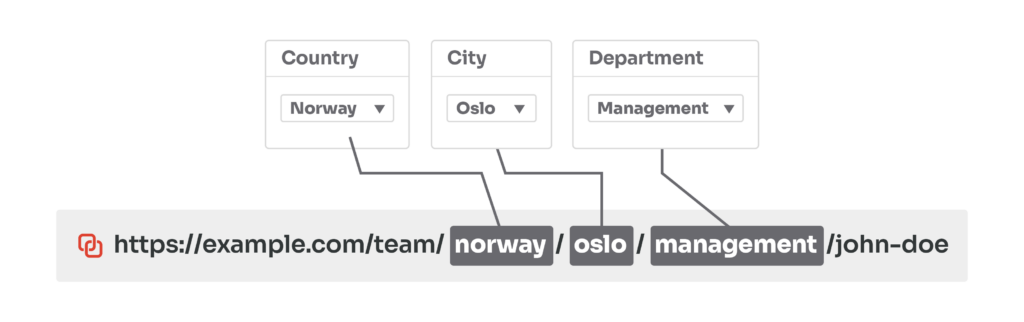
One of Permalink Manager’s unique features is the ability to add custom fields to custom post types' permalinks. It is currently the only actively maintained plugin that offer this functionality, as other plugins with similar features are no longer maintained.
The plugin supports custom post types, taxonomies, and all standard field types managed by ACF. You can combine multiple fields within a single permalink structure to create URLs that reflect your content relationships and hierarchy, without writing complex PHP code snippets.
A custom field value may be interpreted as another parent or child slug, which can lead to unexpected 404 errors.
Leave a Reply