In the WordPress ecosystem, the term "slug" refers to the part of a URL that identifies a specific page in a human-readable format. Slugs appear in search results and can help visitors understand the content of a page before clicking.
By default, WordPress generates slugs from the content title. If a slug already exists, WordPress adds a number, like "-2", to keep it unique. Permalink Manager allows you to override this restriction and reuse slugs when needed.
Slugs do not update automatically if you change the title later. You can edit them manually in several ways: directly in the content editor, using the Quick Edit panel, or through Permalink Manager for more control.
What Is a WordPress Slug?
Simply described, a WordPress slug is a text-based identifier that is saved in the database and assigned to individual posts, pages and terms much like a numeric ID. The primary use of the them is to identify what post, page, category or term should be loaded.
This is not the only place where they show up, since WordPress also makes use of them in its URLs. In general, they are located at the end of them. Without them, your URLs might look like a series of random numbers and letters, which provides no information to your visitors.
The Difference Between Slugs and Permalinks
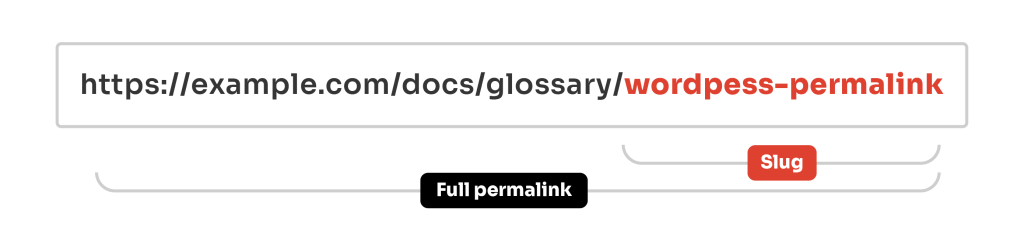
Every post, page, or term on your WordPress site has a permalink. The permalink is the full URL that visitors use to access your content, including your domain name. The slug is the final part of that URL. It identifies the specific post, page, or term within your site.
You can edit the slug to make URLs easier to read, share, or optimize for search engines. Since the slug is part of your permalink, updating it changes the URL too.
WordPress will redirect the old URL to the new one automatically. Still, changing slugs too often can confuse your visitors and might hurt your SEO.
How Does WordPress Create Slugs?
The slug is based on the initial title you give your post or category when you first publish it. When WordPress creates a slug, it:
- Converts everything to lowercase.
- Replaces spaces with hyphens (-).
- Removes special characters and punctuation.
The table below shows how titles are turned into slugs:
| Title | Slug | Permalink |
|---|---|---|
| WordPress Tutorials | wordpress-tutorials | https://example.com/wordpress-tutorials |
| Cotton T-Shirt | cotton-t-shirt | https://example.com/products/cotton-t-shirt |
| Tutorials | shoes | https://example.com/category/tutorials |
If you change the title later, the slug does not update by itself. This protects your existing links, but it also means that if you need the slug to reflect a new title, you have to update it yourself.
Why WordPress Sometimes Adds “-2” to the Slugs?
WordPress requires each native slug to be unique. If you try to create a second item with the same slug, WordPress appends a numeric suffix like "-2" to make it unique.
This behavior ensures WordPress can resolve which content to load when a URL is requested. If you see "hello-world-2", it means "hello-world" was already used by another post, page, or term.
| Post title | Post slug | The original permalink |
|---|---|---|
| Hello World | hello-world | http://example.com/2019/11/20/hello-world |
| Hello World (Duplicate) | hello-world-2 | http://example.com/2020/11/15/hello-world-2 |
WordPress does not allow duplicate slugs by default, but if you want to get around this you can use a plugin like Permalink Manager.
It gives you full control over your custom permalinks and unlike the built-in WordPress permalink system, allows you to use the same slug multiple times, so you can change them any way you want.
Slugs and Search Results
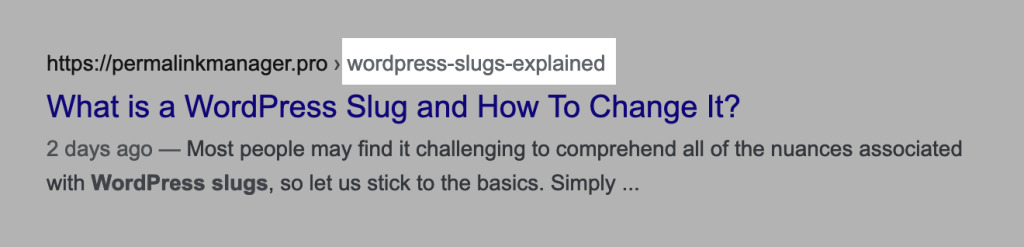
The URL with the slug may appear above the title on search engine results pages. If you keep your slugs short and descriptive, potential visitors are more likely to click your links in search results.
A concise URL looks better in search results and helps visitors know what to expect before they click. This can lead to increased engagement and a decreased bounce rate, which can benefit your SEO indirectly
How to Change The Slugs?
Classic Editor
The field for changing slugs can be in different places depending on whether you are editing a page or a category. If you are using the Classic Editor, you can change it by clicking the small "Edit" button just below the title.


Gutenberg Editor
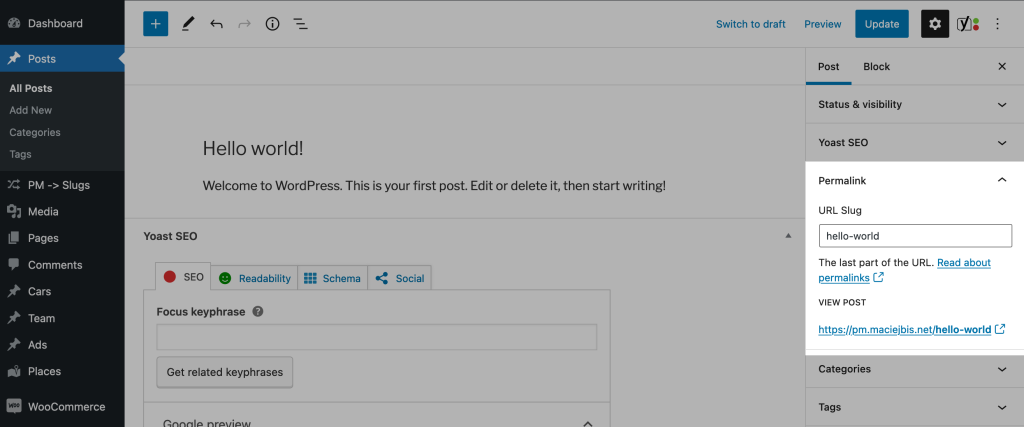
To change a slug in Block Editor (Gutenberg), use to the "Permalink" section in the sidebar.
Categories and Custom Taxonomies
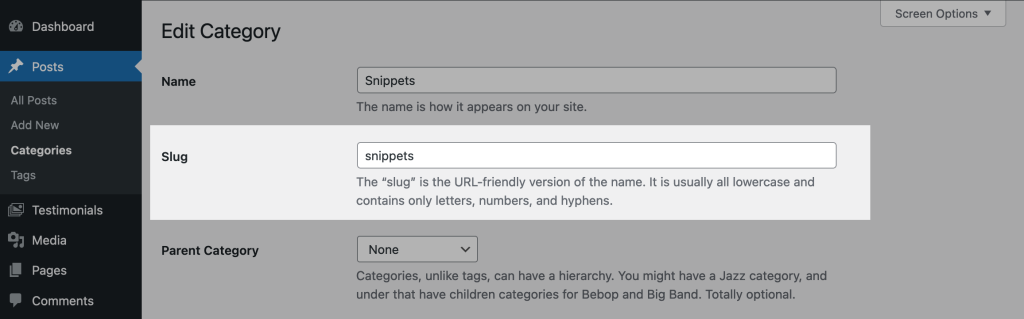
When you edit categories, tags, or custom taxonomy items in WordPress, you will see a slug field on the same page where you change the title and other details.
Quick Edit
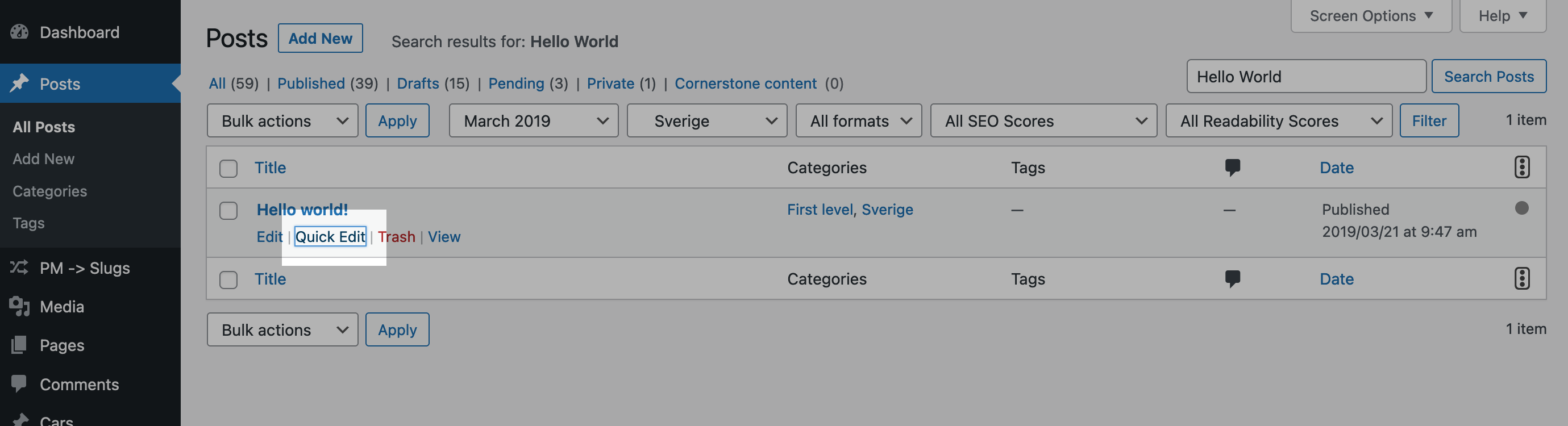
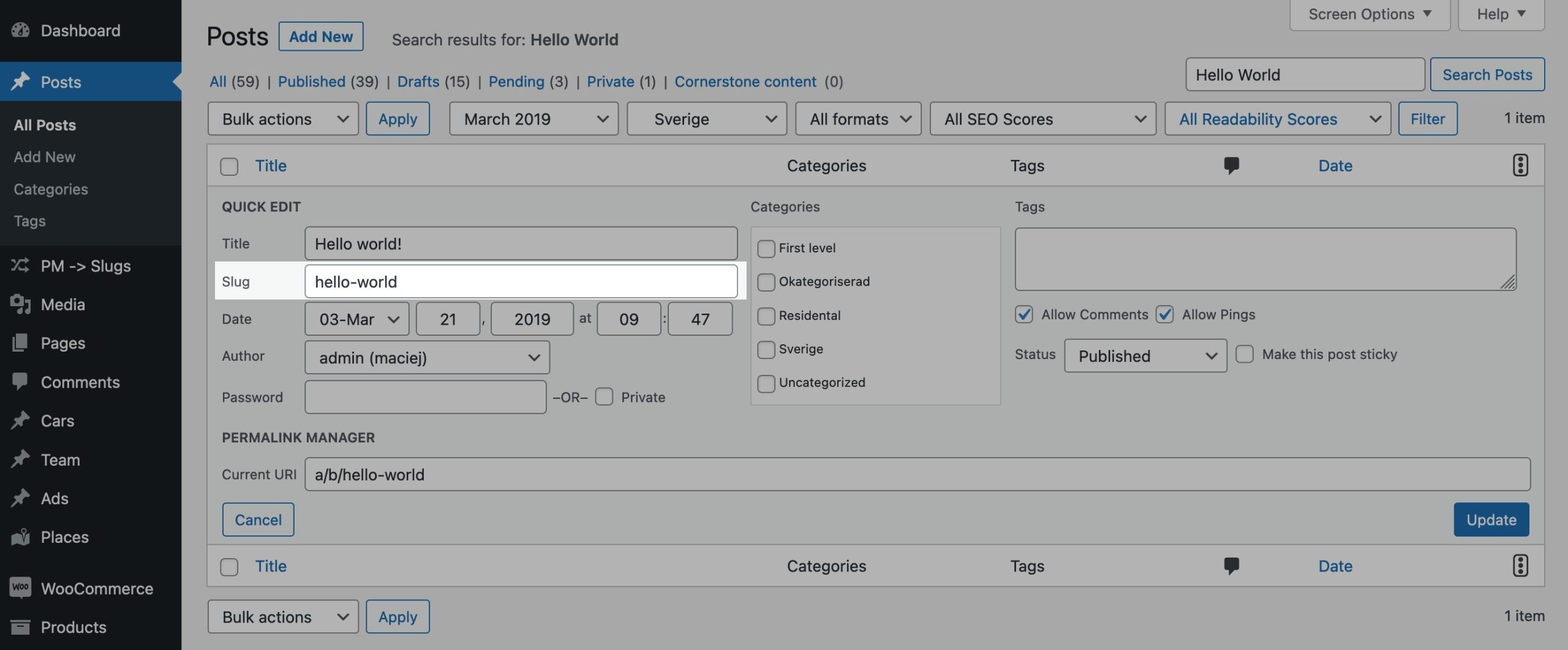
If you want to quickly change a post’s slug, there is a simple shortcut you might not know. In the posts/categories list, click "Quick Edit" under the title, and you will see a field where you can edit a slug.
Overriding WordPress Slugs in Permalink Manager
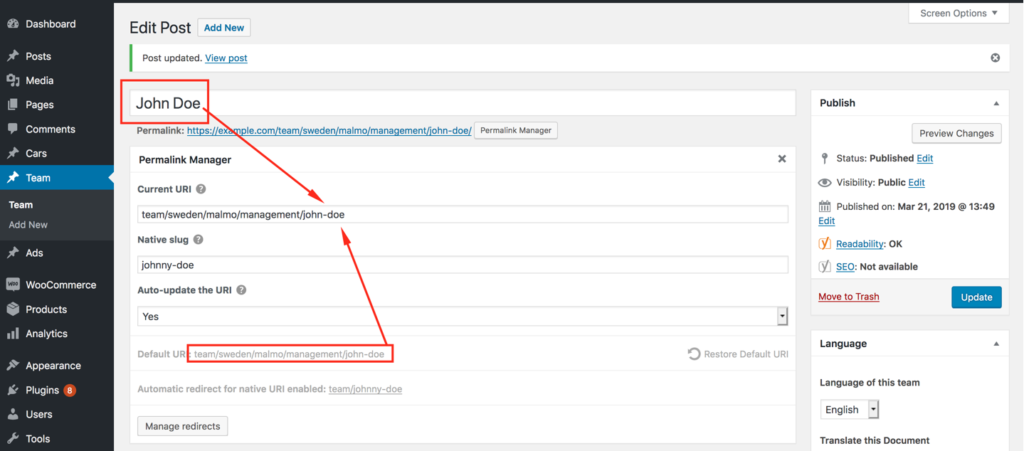
Because URLs created using Permalink Manager may be totally personalized, they do not have to include native slugs. However, if required, they may be edited straight using the URI Editor. By default, the native editor is not shown in the admin interface.
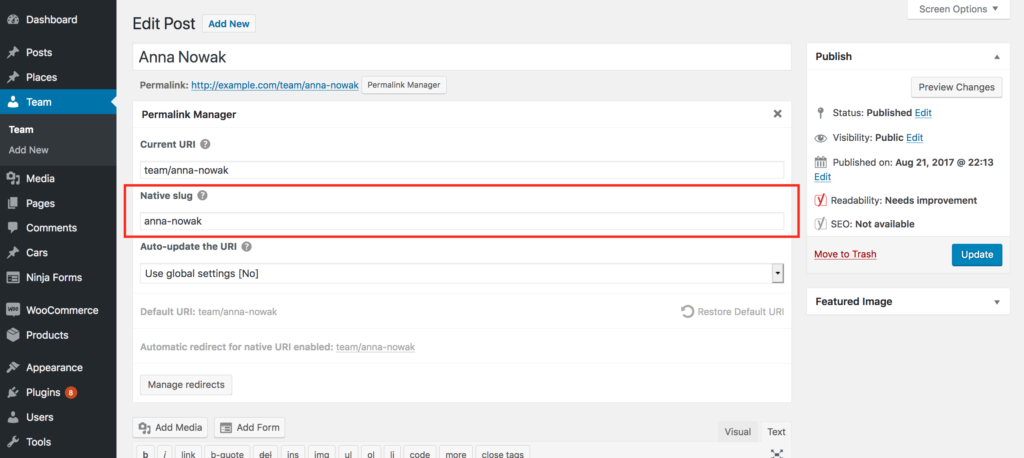
If you need to change the native slugs for whatever reason, you can utilize the URI Editor's slug editor. To do this, turn on the 'Show "Native slug" field' option in Permalink Manager settings, as shown below.
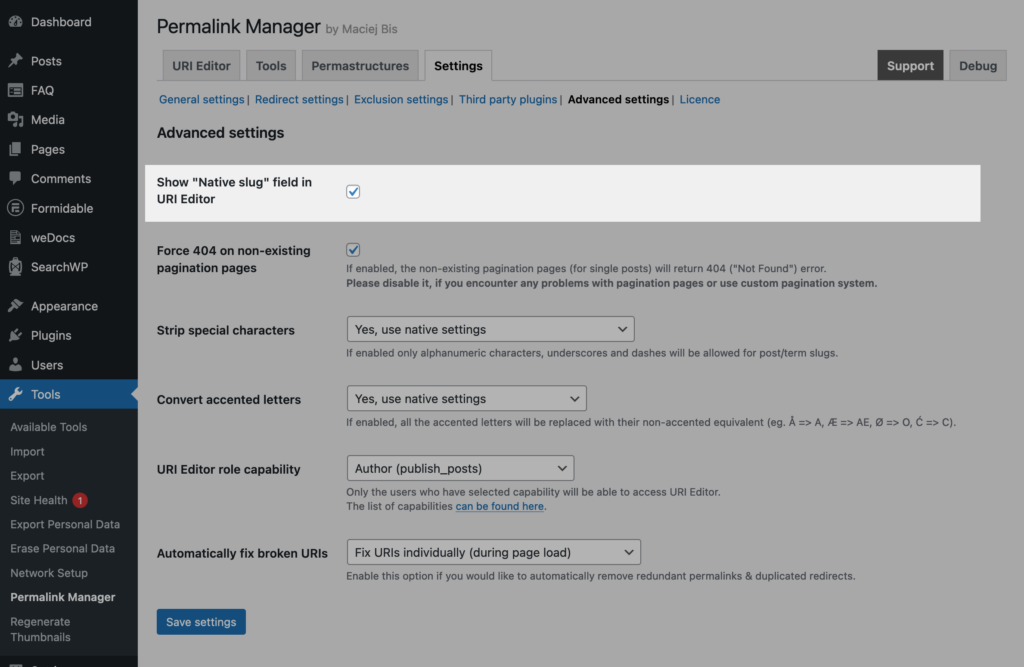
Permalink Manager will display an extra field within the URI Editor if the "Show native slug field" option is checked, as illustrated below.
How to Duplicate the Slugs?
By default, WordPress does not allow you use the same slug more than once. If you try, it adds numbers to the end of the URL. This can be frustrating if you want the same title for multiple child pages or subcategories under different parents.
Using custom permalinks and Permalink Manager, you can reuse the same slug for multiple pages and categories' URLs without WordPress changing them.
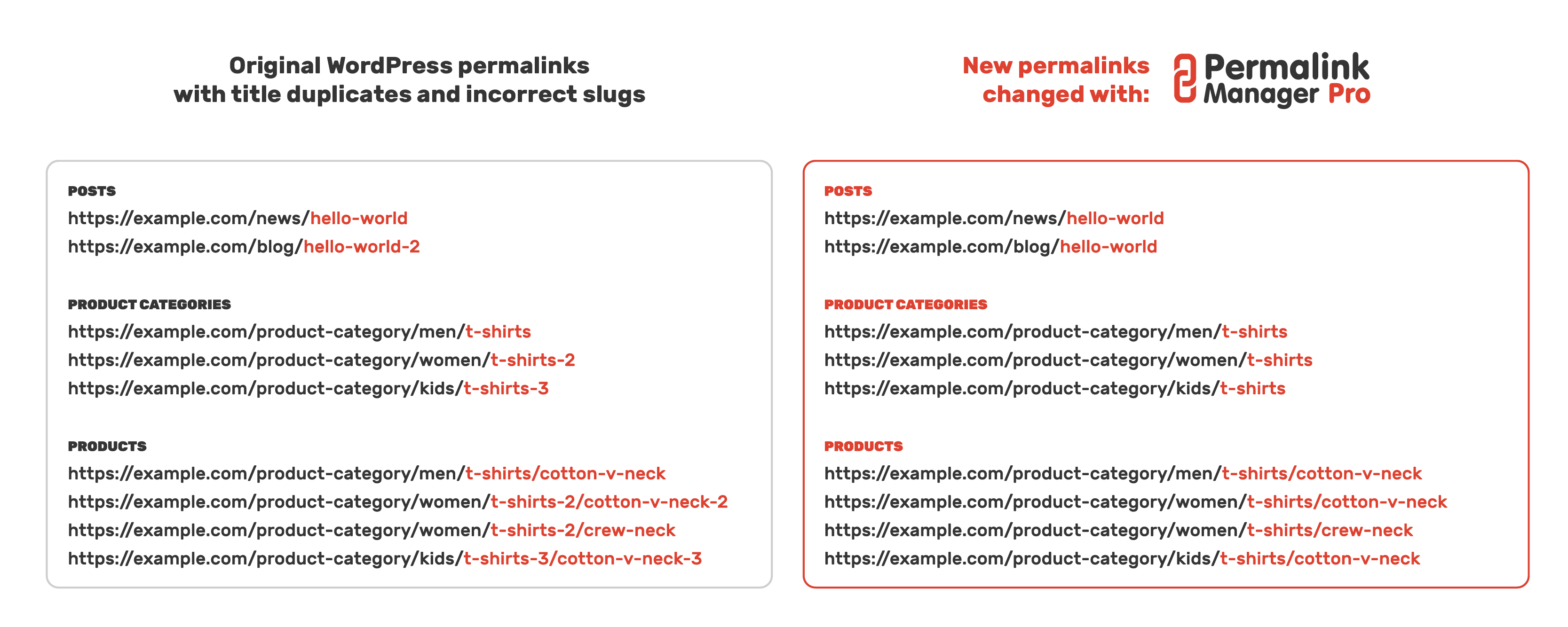
Keep in mind that the native slugs are also included by default in the permalinks generated by Permalink Manager. You may, however, freely edit them and overwrite the default permalinks with your own. There are two basic ways to remove the numerals appended (eg. “duplicate-slug-2“) to the permalinks:
- You can manually remove the numerals appended to the individual permalinks.
- You can make Permalink Manager use the actual titles instead of native slugs in the custom permalinks.
How to Adjust Them Manually?
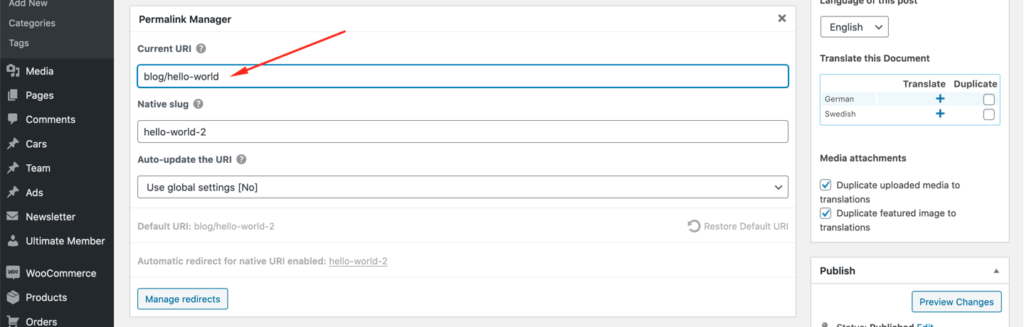
The easiest method to reuse the same slug is to use "Current URI" field in URI Editor:
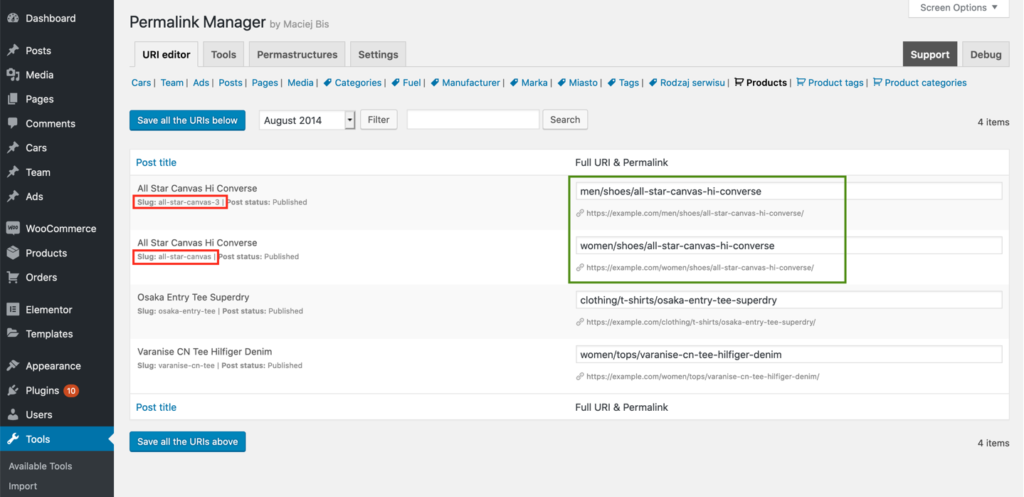
How to Use Actual Titles Instead of Them?
The manual adjustments of individual custom permalinks could be time-consuming. The alternative solution to allow slug duplicates is to select “Use actual titles as slugs (Force custom slugs)” mode in "Slugs mode" in the plugin settings.
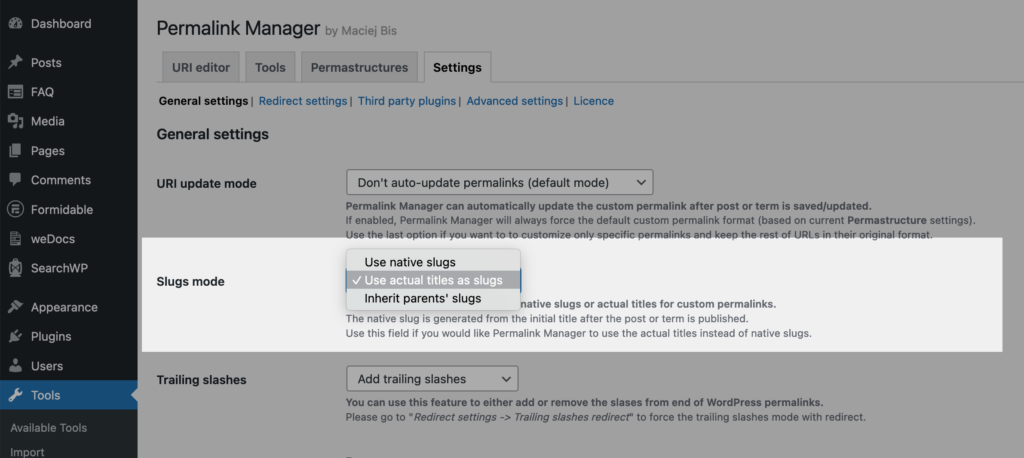
Alternatively, if you do not want to replace slugs with titles globally for all content types, you can change the slug mode for specific content types by replacing default tags like %product% or %product_cat% with %native_title%.

When enabled, Permalink Manager will always use the actual title (eg. “Shoes“) instead of the native slug (eg. “shoes-2“) in the custom permalink. Please keep in mind that the adjustments will only be applied to new posts and terms. Therefore, to apply them to existing items, you should use the "Regenerate/reset" tool.
Permalink Duplicates
Permalink Manager can detect permalinks with duplicated slugs because it uses a custom algorithm to detect the URLs. Shortly, it checks the full URL address instead of the native slug (part of URL). Hence, the slugs can be reused, but still you need to make sure that the full URL address is unique.
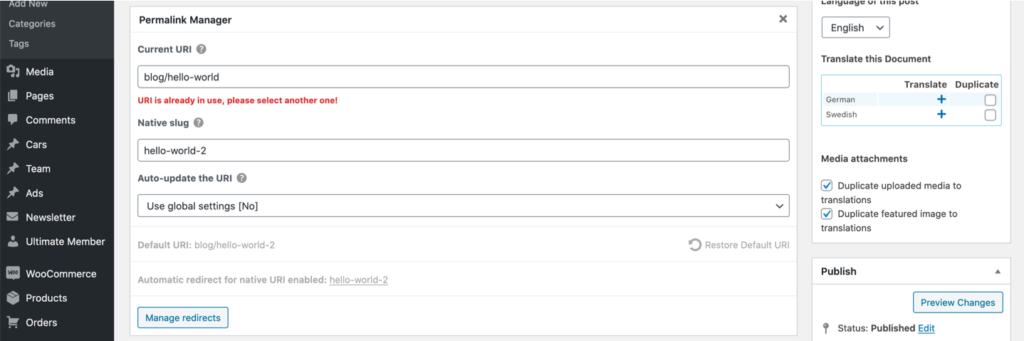
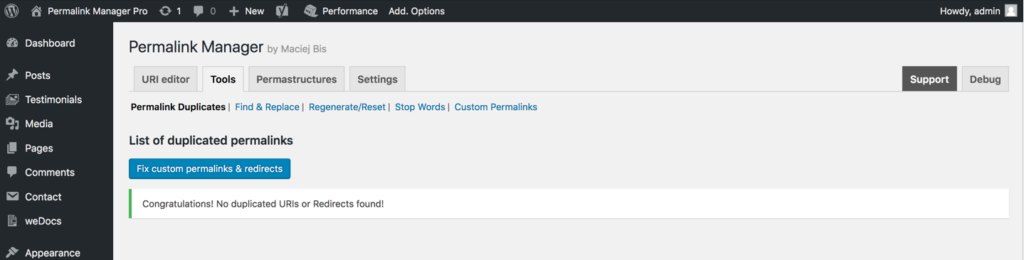
Concurrently, you can always check if any of custom permalinks is duplicated in "Permalink Duplicates" section. To display it, please go to “Tools -> Permalink Manager -> Tools -> Permalink Duplicates” admin page.