Many WooCommerce store owners choose to include a SKU in their product URLs. If you want to do this in your own store, you can set it up in a few different ways, depending on your WordPress experience.
If you already use Permalink Manager Pro, you can add SKUs to your product permalinks without writing any code. You can set everything up directly inside the plugin settings, and this guide will walk you through each step.
If you are just getting started with customizing your store's URL structure, it is worth first checking out the general guide on WooCommerce permalinks to understand the fundamentals.
The features described in this article are exclusive to the Permalink Manager Pro and are not available in Permalink Manager Lite (free version).
Step-by-Step Guide
Step 1: Choose Your SKU-Based URL Format
WooCommerce keeps product SKUs in a custom field named
_sku
. Permalink Manager Pro can read it directly and use its value as part of your product URL.
To insert the SKU into the permalink format, use the
%__sku%
tag. You can add the tag anywhere in the permalink structure. You may also combine it with extra text or separate the SKU and product name using a slash or hyphen.
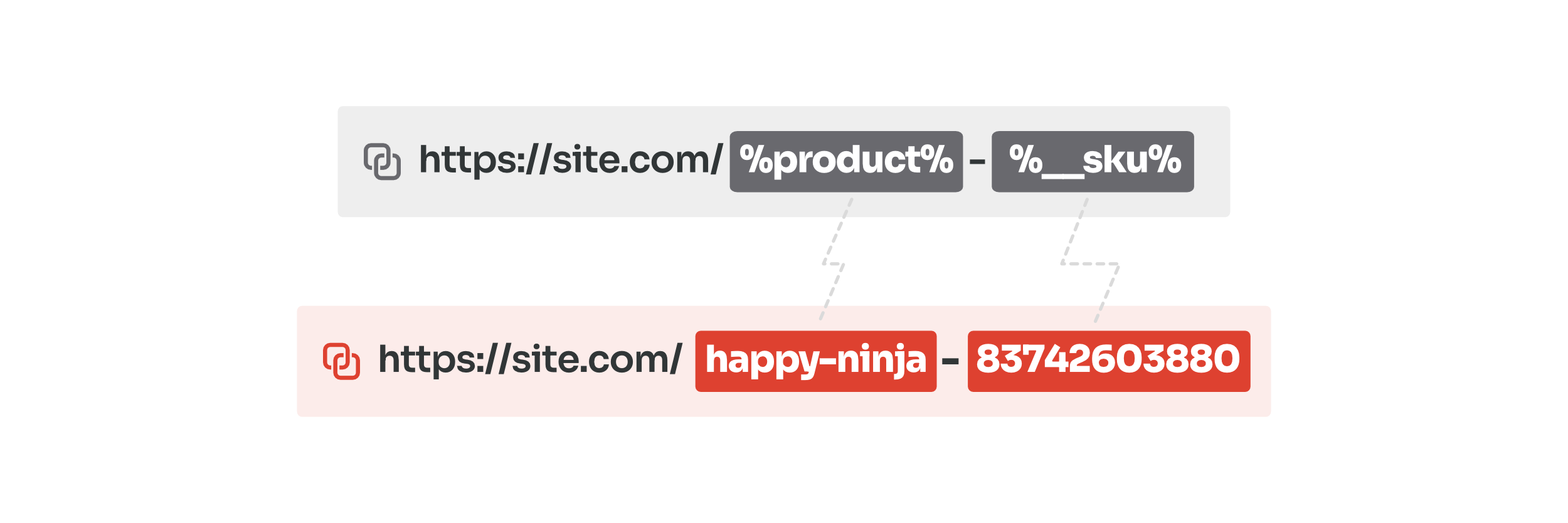
See the before and after URL examples below:
| Permastructure format | Example URL |
|---|---|
%product%-%__sku%
|
example.com/happy-ninja-83742603880
|
%product_cat%/%product%-%__sku%
|
example.com/posters/happy-ninja-83742603880
|
%__sku%/%product%
|
example.com/83742603880/happy-ninja
|
Step 2: Update Permastructure Settings
To insert a SKU into your products permalinks, go to "Tools -> Permalink Manager -> Permastructures" section.
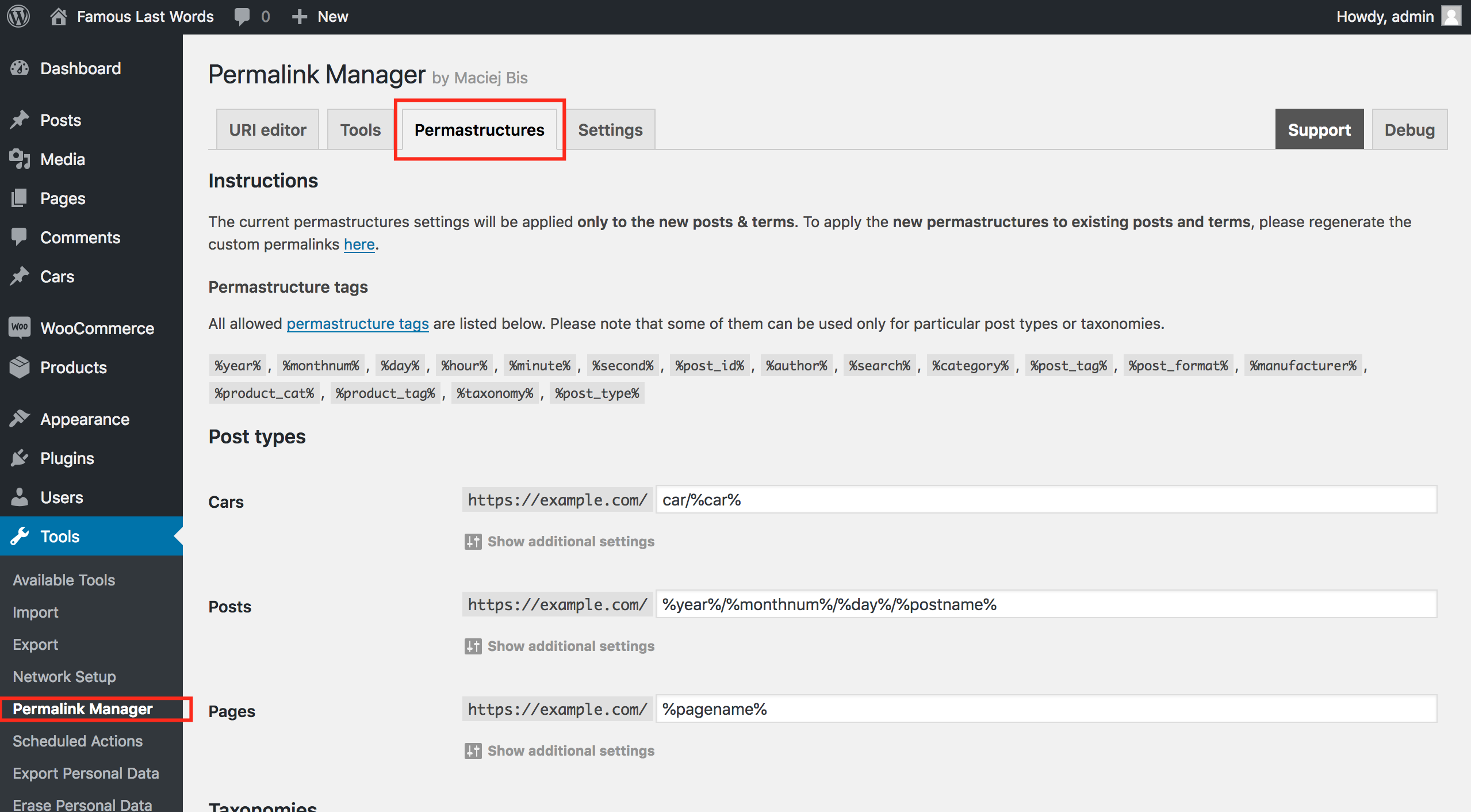
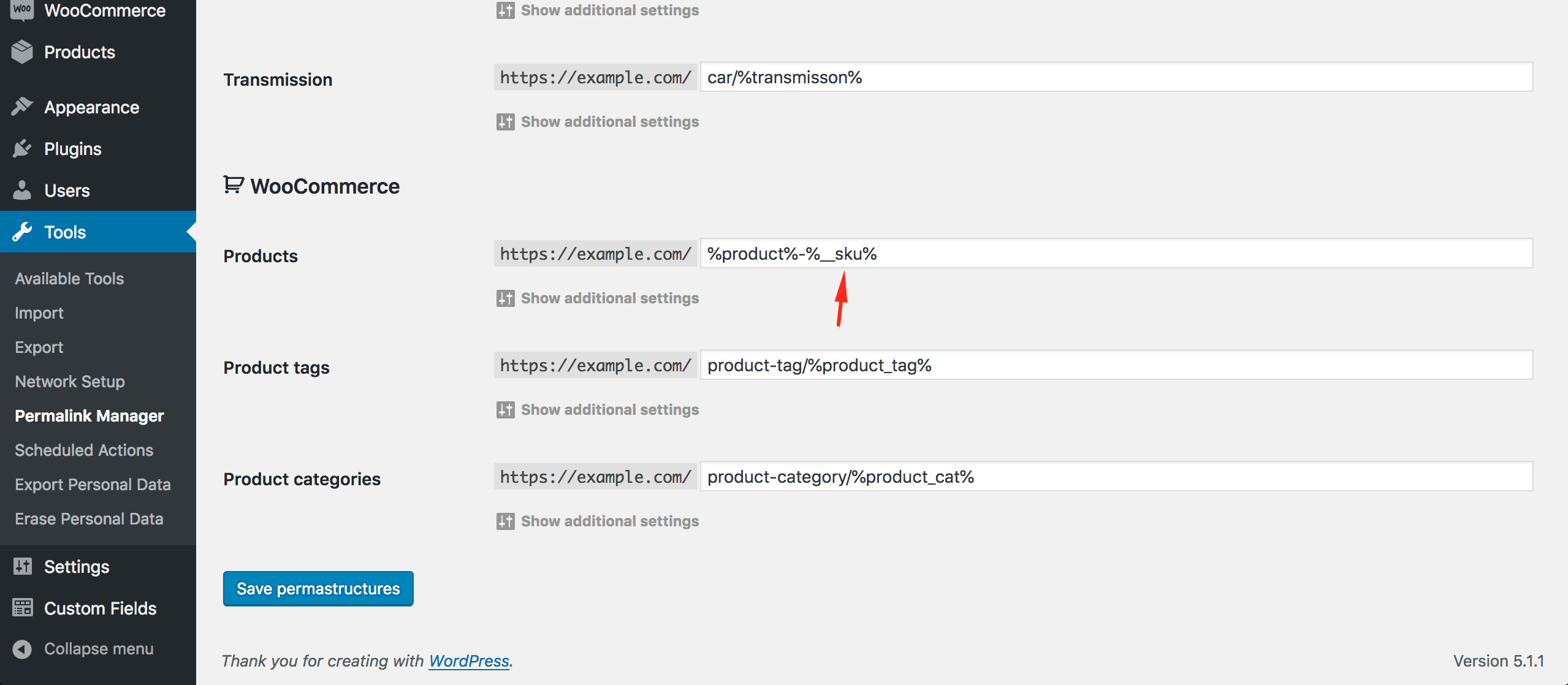
Once there, scroll down to the WooCommerce section and look for the "Products" row. In the input field, add
%__sku%
wherever you want the SKU to appear.
Step 3: Apply Changes to Existing Products (Optional)
New products will automatically use the new permalink format you set. Existing products will keep their current URLs until you regenerate them or manually update them.
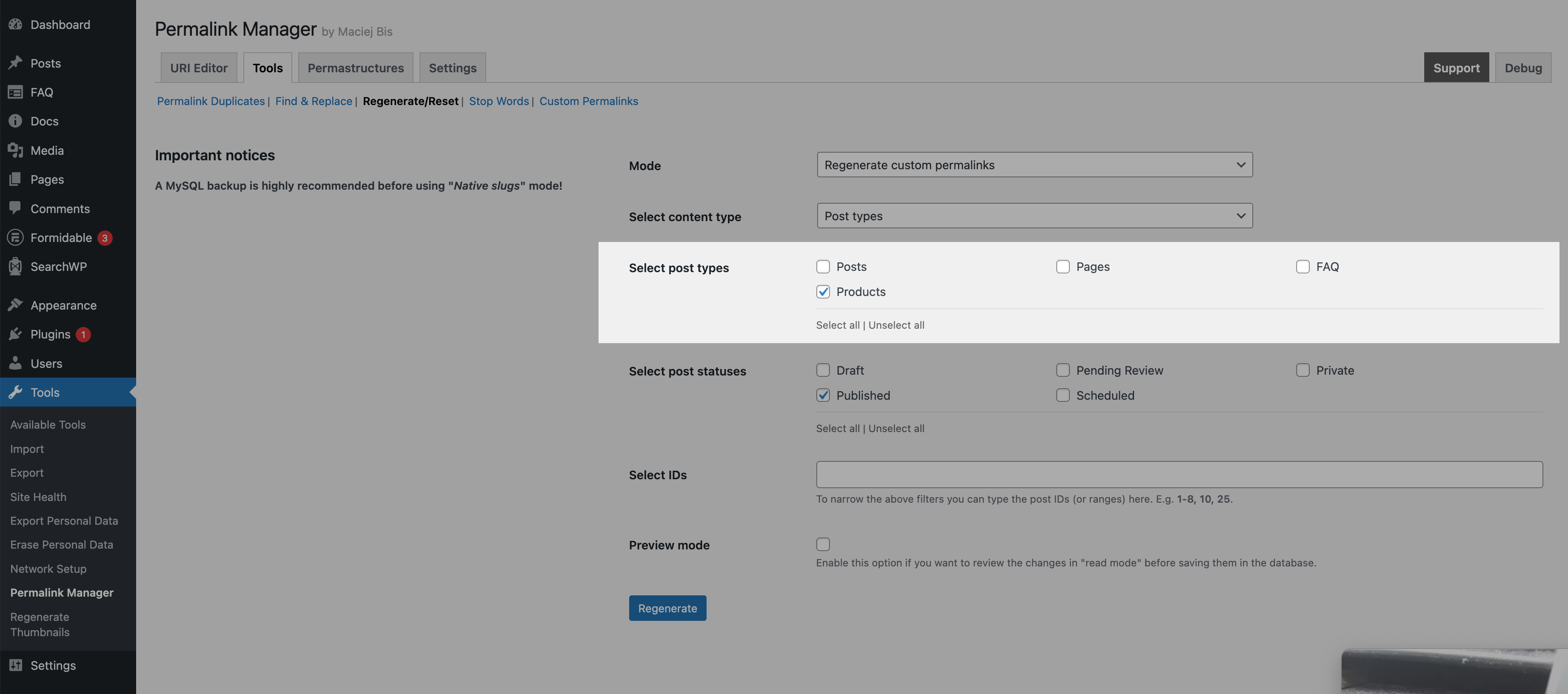
If you want to apply the new format to older products, follow these steps:
- Go to "Tools -> Permalink Manager -> Tools".
- Open the "Regenerate/Reset" tab.
- Select "Products" and run the regeneration.
| Field | Selection |
|---|---|
| Mode | Regenerate custom permalinks |
| Select content type | Post types |
| Select post types | Products |
| Select post statuses | Published |
Additional Notes
How to Safely Add SKUs to Product URLs
Changing any URL on a live website needs care. If a product page already shows up in search results or has backlinks on other websites, updating its permalink can break those links and hurt your rankings.
If you decide to add SKUs to your product URLs, Permalink Manager Pro can handle the redirects automatically. You do not need to install another redirect plugin.
After a product URL is updated, the old address will redirect visitors to the new one.
What Happens If a Product Has No SKU?
When a product in WooCommerce has no SKU assigned, Permalink Manager simply skips that part of the URL.
Updating SKUs Later
By default, if you change a product SKU after the custom permalink has been generated, Permalink Manager will not update the URL automatically. This behavior helps avoid unwanted URL changes that may have a negative effect on SEO.
If you want the permalink to update after changing the SKU, there are two options available:
- Change the custom permalink manually on the "Edit product" screen.
- Turn on auto-update mode in the plugin settings.